
جهانی: خطر نشت و پوسیدگی صورتی با بالا رفتن دمای تفاله سیبزمینی از ۱۸ درجه سانتیگراد افزایش مییابد
کلاهبرداریهای کلیدی
- 65°F (18.3°C) pulp is the harvest limit for leak risk
- 36 hours can be enough for leak symptoms in hot tubers
- 50°F (10°C) pulp temperature halts the leak pathogen
- 40°F (4.4°C) in store makes the pink rot pathogen inactive
چرا از آن مهم
- برای کشاورزان
- دمای پالپ غده را قبل و در حین برداشت با یک پروب بررسی کنید؛ وقتی به ۱۸ درجه سانتیگراد رسید، متوقف کنید و در ساعات خنک صبح دوباره شروع کنید.
- برای پردازندهها
- برای مزارعی که در هوای گرم برداشت میشوند، دمای خمیر را هنگام بارگیری در یادداشتهای ورودی بپرسید و بارهای پرخطر را جدا کنید.
- برای تامین کنندگان
- Offer growers simple probe thermometers and cooling advice with harvest-time fungicide or phosphite programmes
خلاصه ۳۰ ثانیهای
Harvest timing by thermometer is the cheapest defence against two water-borne tuber rots. Guidance from Maine and California converges on one number: do not lift when tuber flesh is at 65°F, about 18°C, or warmer. Above 25°C the leak organism grows fast, and symptoms may appear within a day and a half of lifting. Cooling below 10°C stops leak, while the pink rot organism goes dormant below about 4°C. Pink rot also depends on waterlogged soil, so irrigation that leaves fields saturated before harvest adds to the danger. Wounds are the entry point for leak, which links this risk to harvester settings and skin set. Late September lifting in the north and early crops in warm regions are most exposed. Rotting tubers can wet healthy ones and invite bacterial soft rot. The fungicide advice cited here follows Californian labels and must be checked against national registrations before use.
Leak and pink rot are two tuber diseases that often start at harvest. Leak is caused mainly by the soil organism Pythium ultimum. Pink rot is caused by Phytophthora erythroseptica. Both enter tubers in wet soil and both do most damage in warm crops.
University of Maine Cooperative Extension advises growers to avoid harvesting when tuber pulp temperature is 65°F or higher. That is about 18.3°C. The UC Statewide IPM Program in California gives the same limit for pink rot. It advises against harvesting tubers with pulp temperature above 65°F.
How fast leak develops
Leak symptoms appear when tuber pulp temperatures reach 65°F, according to the Maine bulletin. The fungus grows rapidly above 77°F, or 25°C. At high pulp temperatures, infected tubers can show leak in as few as 36 hours. The disease is halted below 50°F, or 10°C.
روزهای هفته. با یک کلیک اشتراک خود را لغو کنید.
Leak needs a wound to enter. Brown, water-soaked lesions form around wounds. Inside, the flesh turns into a dark, watery rot. In late stages only a hollow shell remains, and pressure releases a clear to brownish liquid. The spores can survive in soil for many years. The Maine bulletin notes that Pythium does not spread well from tuber to tuber in storage.
Pink rot and wet soils
The pink rot pathogen becomes active when soil is saturated with water, according to UC IPM. Growers should avoid prolonged saturation during irrigation. In store, the fungus is inactive below 40°F, or 4.4°C.
UC IPM lists fungicide timing for pink rot at flowering and again 14 days later. It also describes applications 2 and 4 weeks before harvest. Fungicides in groups 1, 4, 9, 11 or 17 should get no more than one application before rotating to another mode of action. Phosphite can be applied after harvest at 0.1 gallon per ton of tubers.
چرا از آن مهم
Many Northern-hemisphere crops are still being lifted in late September. Warm afternoons and wet fields create the exact conditions for these rots. Lifting in the cool morning hours can keep pulp temperature below the limit.
A few rotting tubers can wet their neighbours and open the door to bacterial soft rot. A probe thermometer in the field is a low-cost tool. It helps decide when to start and stop the harvester each day.
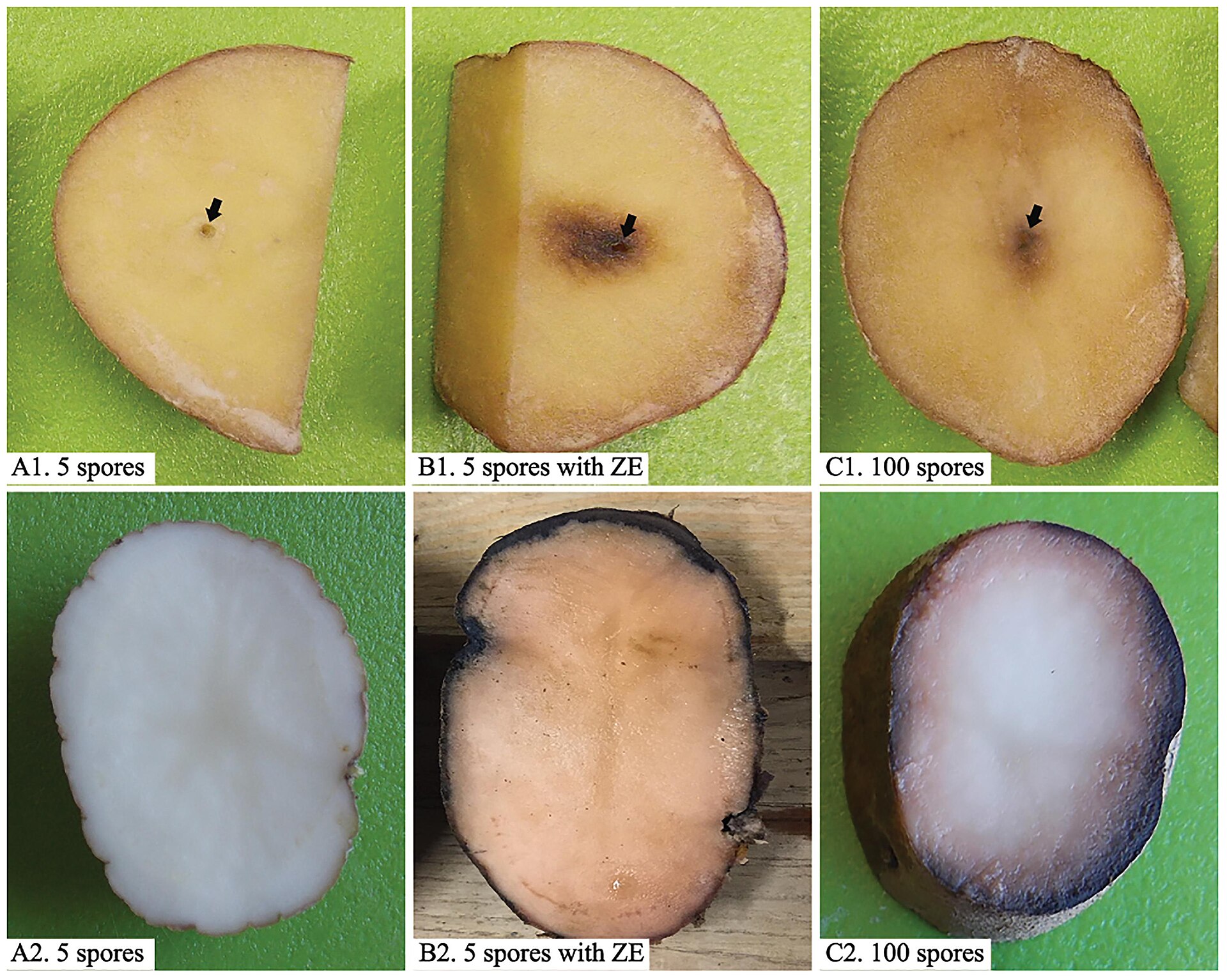
Photo: Potato tubers inoculated with the pink rot pathogen in a laboratory study (illustrative). He Jiang, Hye Weon Hwang, Tongling Ge, Barbara Cole, Brian Perkins, Jianjun Hao / ویکیانبار , CC BY 4.0
خلاصه جهانی سیب زمینی
پنج خبر برتر، قیمتها، هشدارهای بیماری و رویدادها. صبحهای روزهای هفته، بدون تبلیغات.
منابع
- University of Maine Cooperative Extension — Bulletin #2446, Potato Leak — https://extension.umaine.edu/publications/2446e/
- UC Statewide IPM Program — Pink Rot, Potato Pest Management Guidelines — https://ipm.ucanr.edu/agriculture/potato/pink-rot/
در این مطلب لینک شده است
- کشور محل اقامت
- جهان
- بخش ها
- جمع آوریاخبارحفاظت از برش
داستان های مرتبط

ایالات متحده: برداشت سیبزمینی میشیگان ۱۵٪ انجام شد زیرا خریداران چیپس قراردادهای کوچکتری را برای سال ۲۰۲۷ اعلام میکنند
ایرلند: کشاورزان با افزایش هزینههای دیزل، امکانسنجی بخش کشت اصلی ۷۰۰۰ هکتاری را زیر سوال میبرند


